Add a header to begin generating the table of contents
Goal
- Developed a narrative-driven project starting with research and finishing with documentation designed for team collaboration
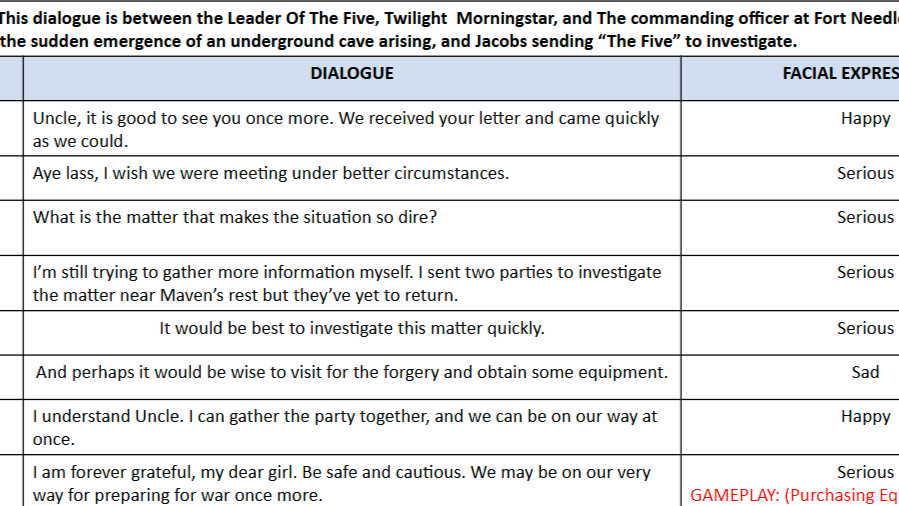
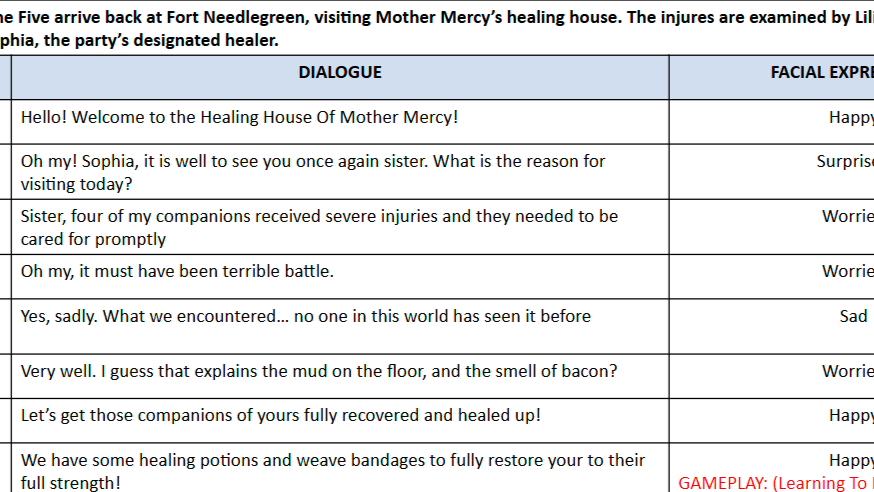
- Created linear and branching dialogue that is congruous with the developed characters and coherently leads to gameplay
- Produced clear and understandable character, location, and script materials for art and designs teams, for clear team collaboration
Overview
Linear & Branching Dialogue
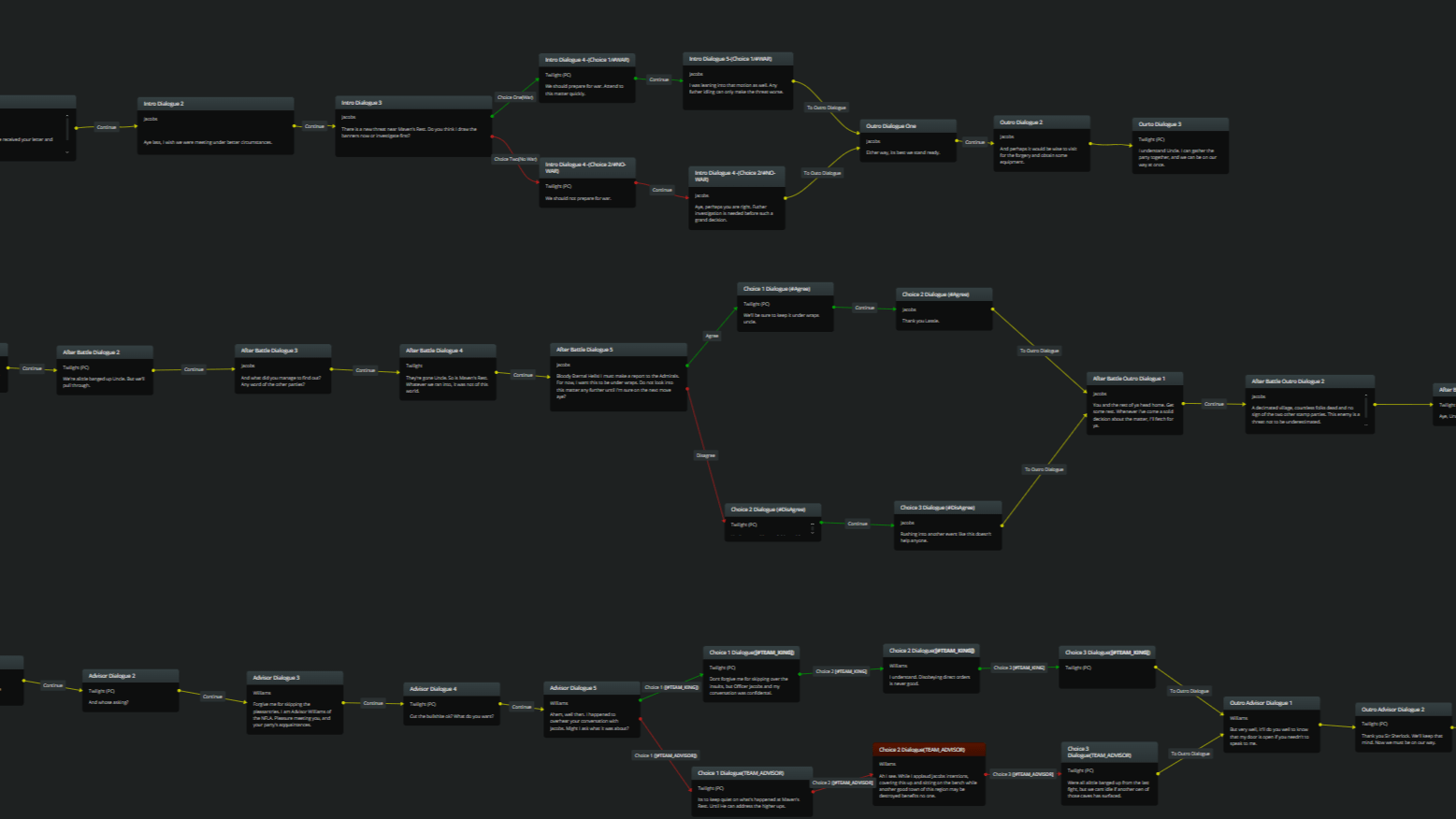
Designed Quest Branching Dialogue
Creation Process for Quest Branching Dialogue:
Step 1: Created branching dialogue threads that include variables and choices fluidly into gameplay. Process included the following design considerations:
- Roleplaying Choice-HUB: player is given choices in response to the NPC that are polar opposites to best suit the player’s playstyle
- Tutorial Quest: There were no acceptance hubs for this quest since it was involved with the tutorial
- Polarizing Choices: Total opposite choices to lean into various player types
Step 2: Created dynamic dialogue that stemmed from player choices. Driven to create thematic choices that could deepen player immersion:
- Urgent Stakes: Reaffirmed clarity on the narrative urgency to visit the forgery and ready for combat gameplay.
- Respected Player Character: Made it very easy to see that Leader Character trusts and believes Player Character and their insights, so the player feels that their choices hold some sway in the matter.
- Narrative Coherence: Quest shows the player’s unyielding loyalty to their leader character at this stage in the game, but is offered polar opposite choices that can appeal to other player types
- Directed to Gameplay: Focused on making sure dialogue was informative, straight-to-the-point, and speedily led to gameplay
Step 3: Developed a playable prototype of the branching dialogue using Arcweave to show the context in a narrative flow
Created a prototype with the following goals:
- Optimized player interactions: Through a clickable prototype, the dialogue can be experienced and edited to improve pacing and players’ investment
- Live Design Space: By the note section on Arcweave, design teams can leave notes on experience and development directly in the prototype
Linear Dialogue
Quest Linear Dialogue Creation Process:
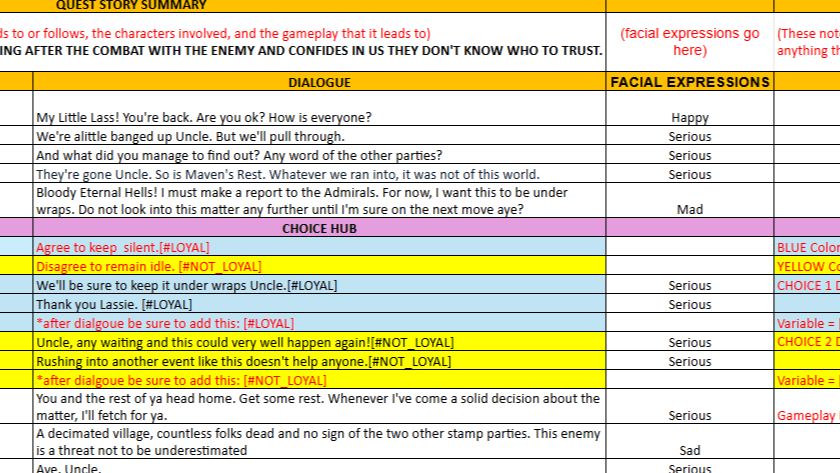
Step 1: Craft Linear Dialogue for Gameplay-Story Integration
Step 2: Design Dialogue for Character and Goal Clarity
Focus:
Define clear, lore-driven quest goals.
Specify resource costs to tie to future quests.
Indicate resource locations to guide player effort.
Iteration Needs
Step 3: Revise Dialogue for Immersion
Enhancements:
Leader NPC: Portray as authoritative, respectful of the player, and knowledgeable about the threat.
Player Character: Emphasize tactical skill and threat awareness.
Stakes: Add urgent lore (e.g., village under imminent attack) to make Forgery visit compelling.
Character Design & Barks
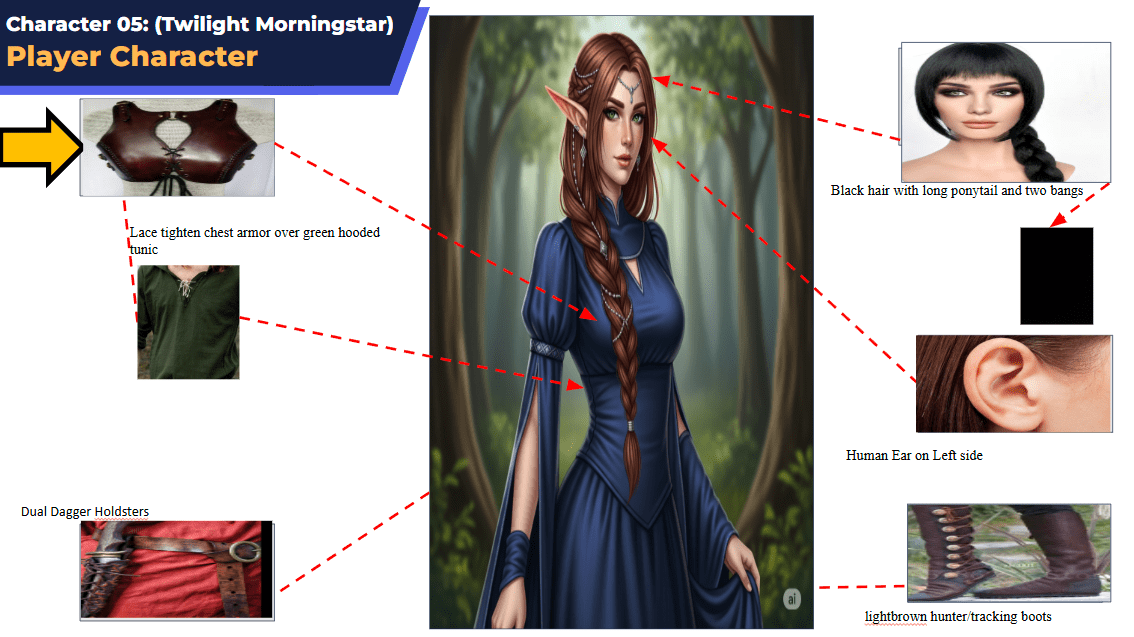
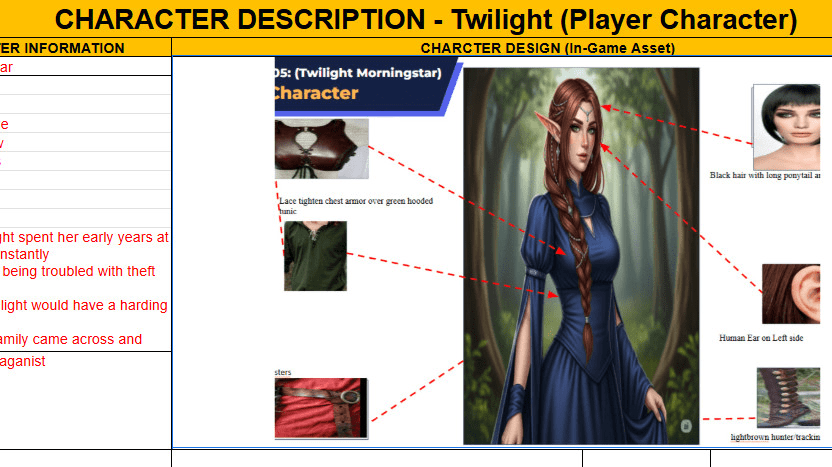
Twilight Morningstar
Character Type (Playable Character)
Process where I crafted multiple player characters with motivations that arise and conflict with the story, leading to strong and dynamic choices that resonate with players through gameplay quests and mechanical themes.
Designed each character with the following considerations:
- Research and Design: character motivations and personality to reflect and show narrative themes, combat functions, and themes.
- Bios and Barks: developed dialogue for each character, keeping their design, combat function, and Jungian archetypes in mind.
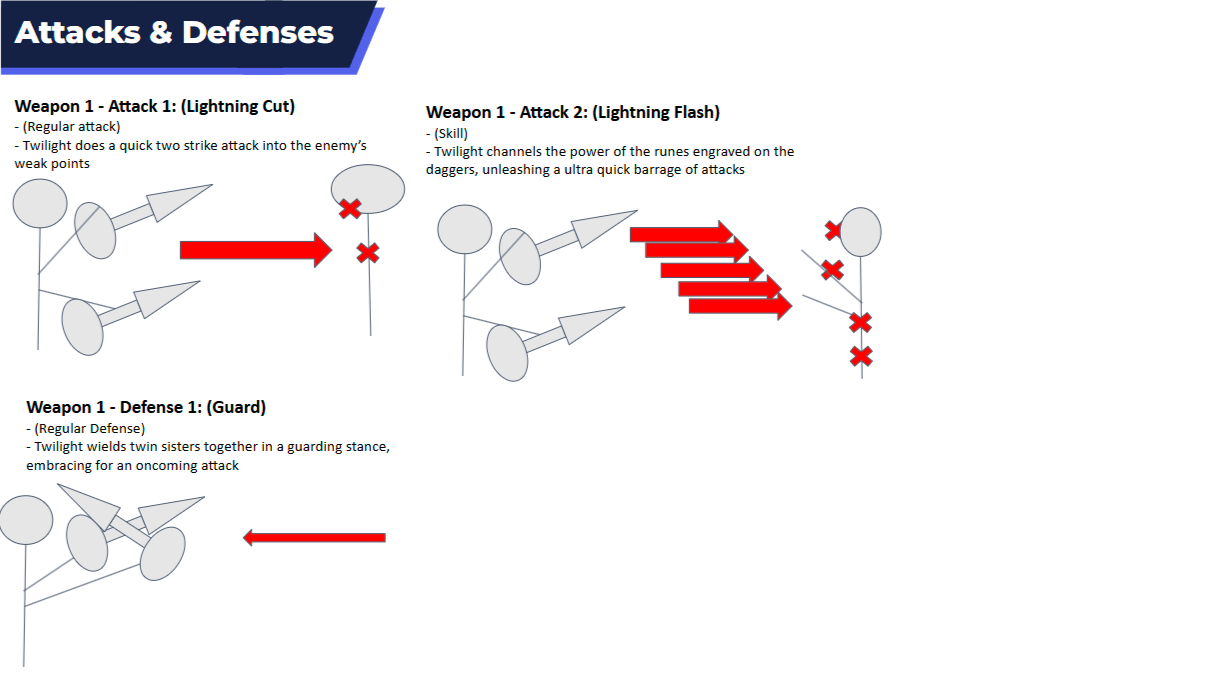
- Combat Design Support: game-enhanced detail to each character by giving unique weapons and attacks to each character.
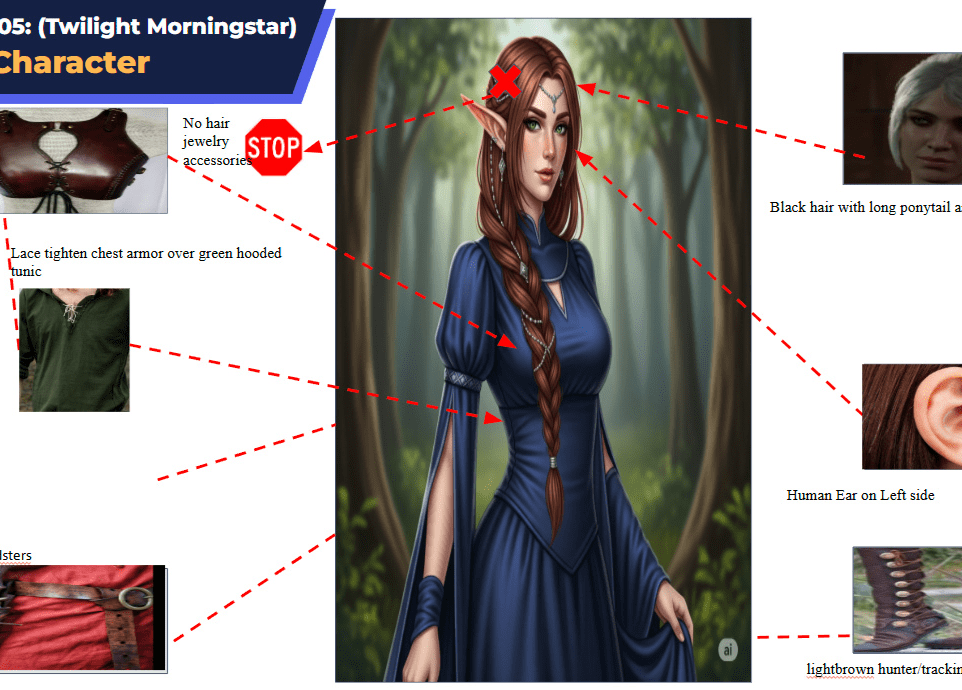
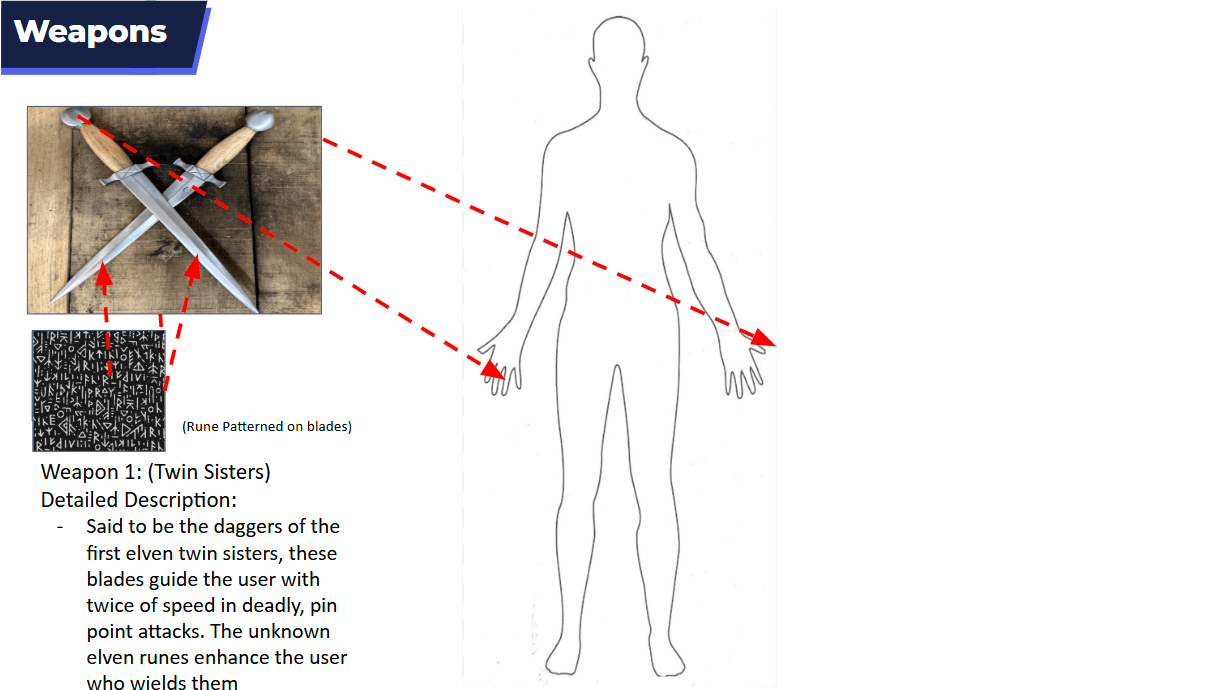
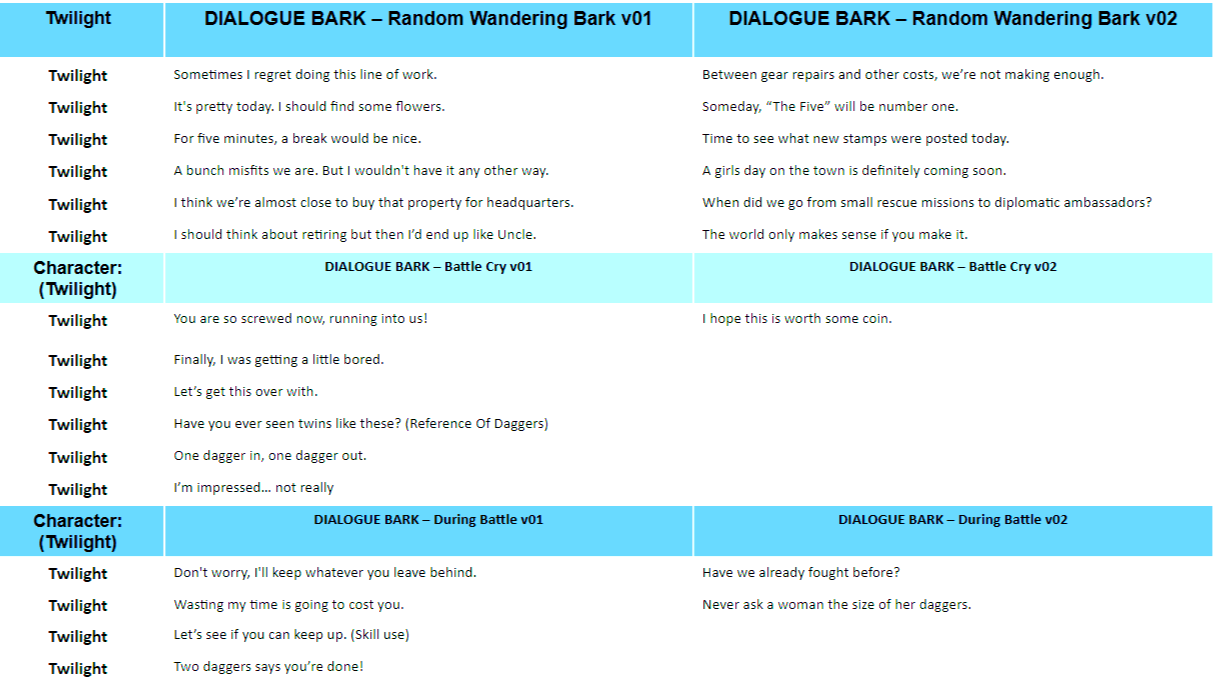
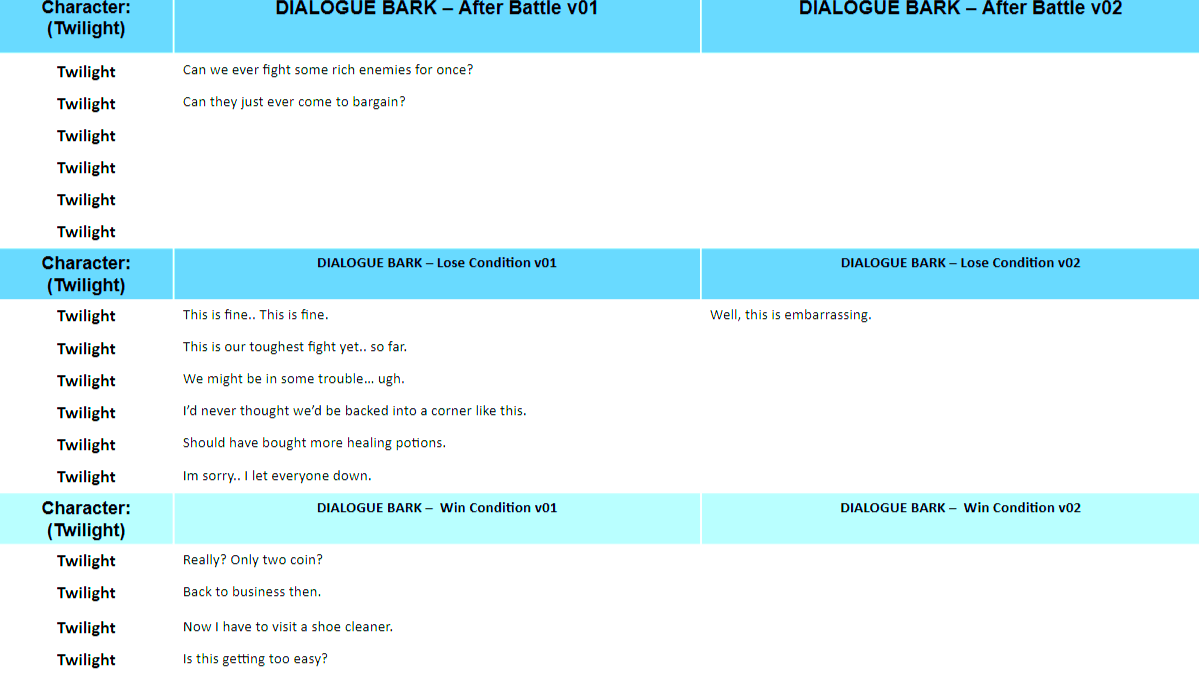
Twilight Morningstar, one of several playable characters I’ve developed, has a heartfelt backstory, an eye-catching weapon, and attacks set, along with engaging dialogue and barks.
Her main weapon, Twin Sisters, enhances her anatomy, increasing her speed and perception for deadly pinpoint attacks.
- Twilight’s origins help provide context to her connections with other characters and her place in the world.
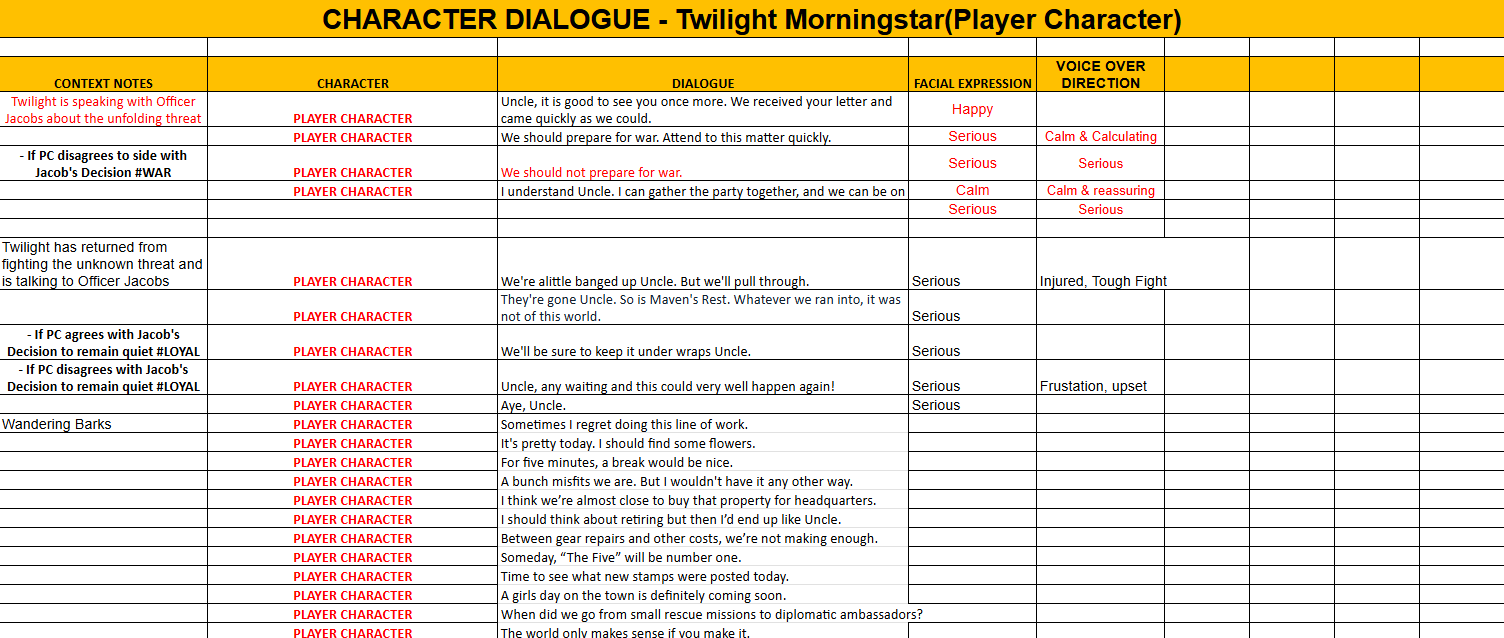
- With humorous and relatable barks to her personality, players can easily have a natural draw to her character.
Officer Jacobs
Character Type (Ally NPC)
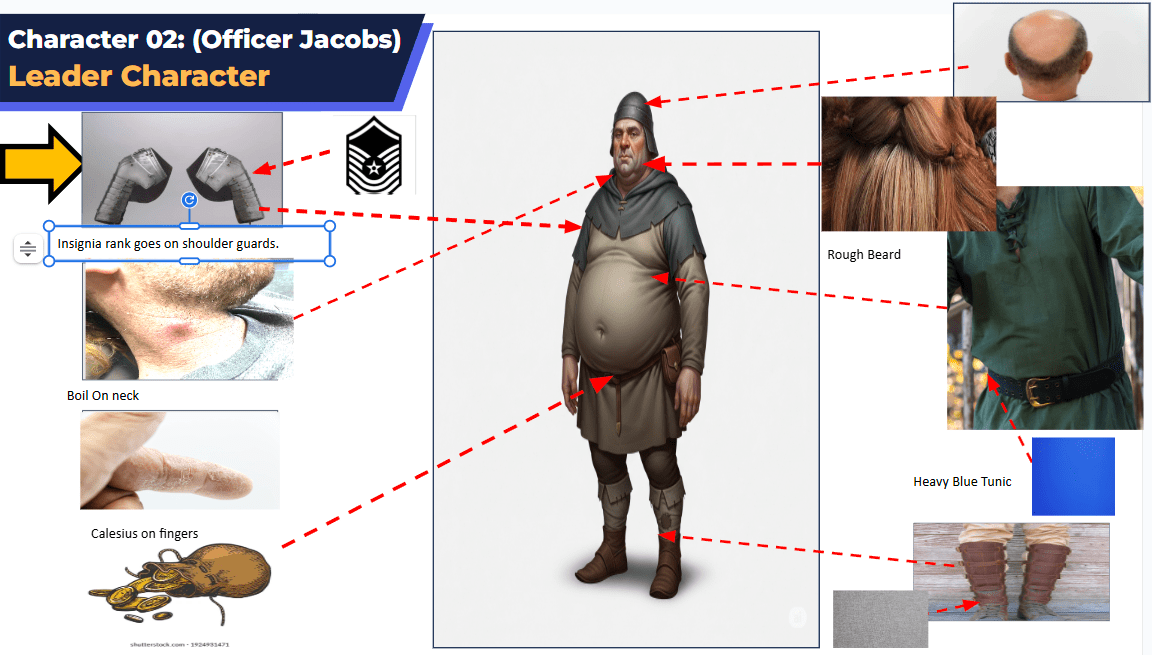
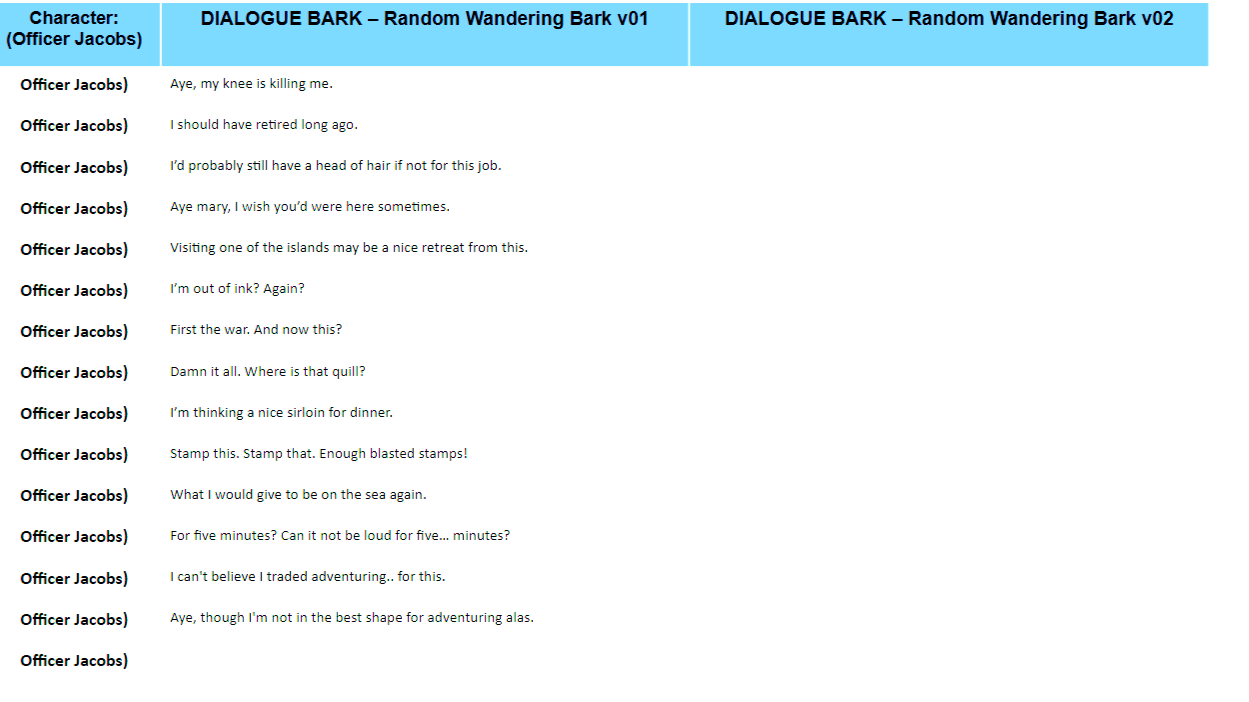
Designing a leader NPC quest giver, and created their dialogue barks to establish them in their exact location in the world. As well as crafting a distinct storyline that ties this character to gameplay in the region.
Creating Officer Jacobs, he was designed to serve as the main NPC that the player would interact with.
Jacobs is positioned as the Leader Character, where players will be given the main questlines:
- With his origin story, players can immediately recognize and understand the connection between Jacobs and other playable characters.
- Officer Jacobs is a noble and sensible officer.
- I designed this character with the intentions in mind of showing someone whose been through a rough and hardworking life, and that exhibits honorable and admirable traits like honesty and respect.
Orgboar
Character Type (Enemy Character)
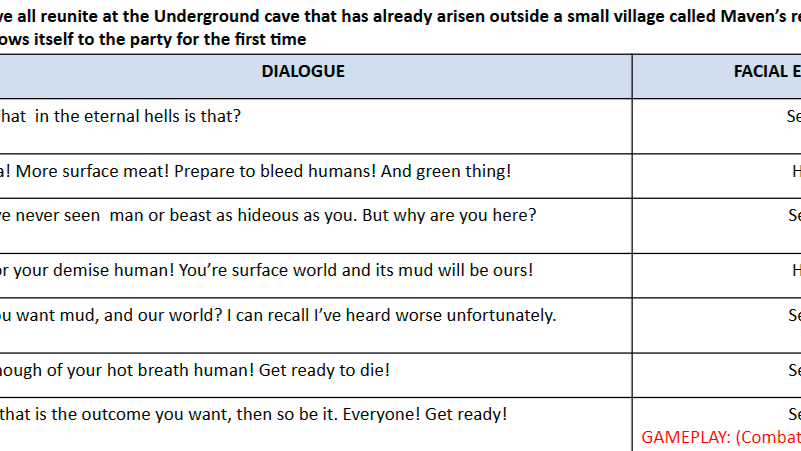
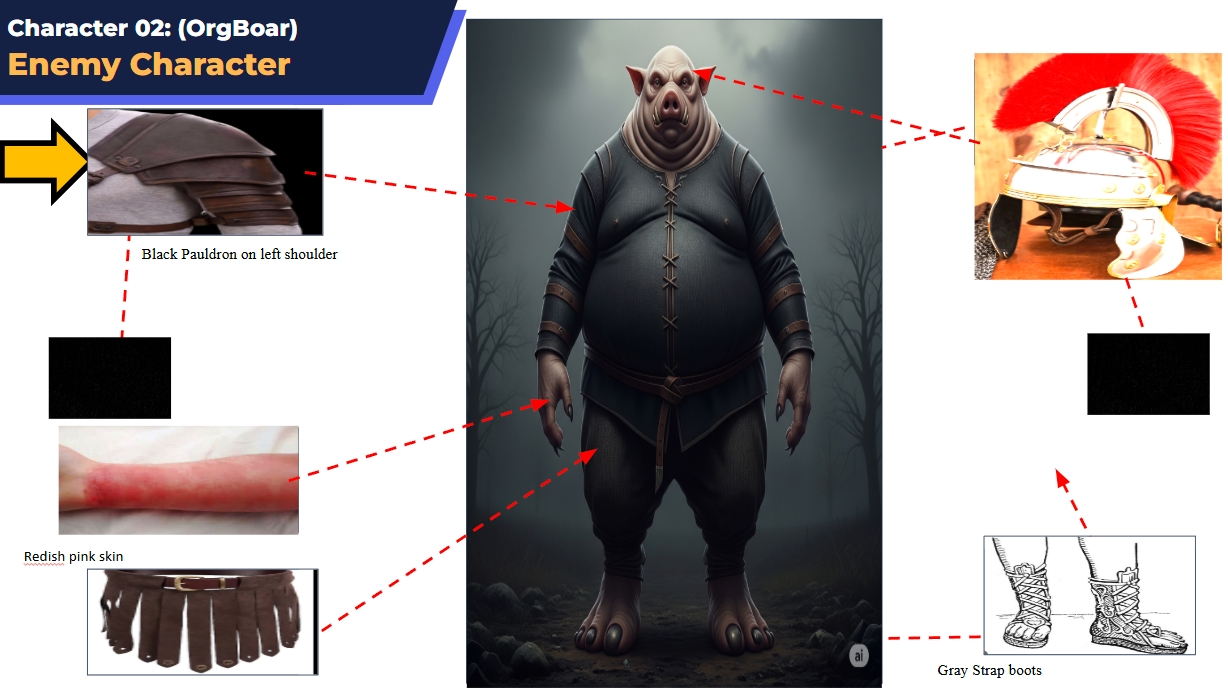
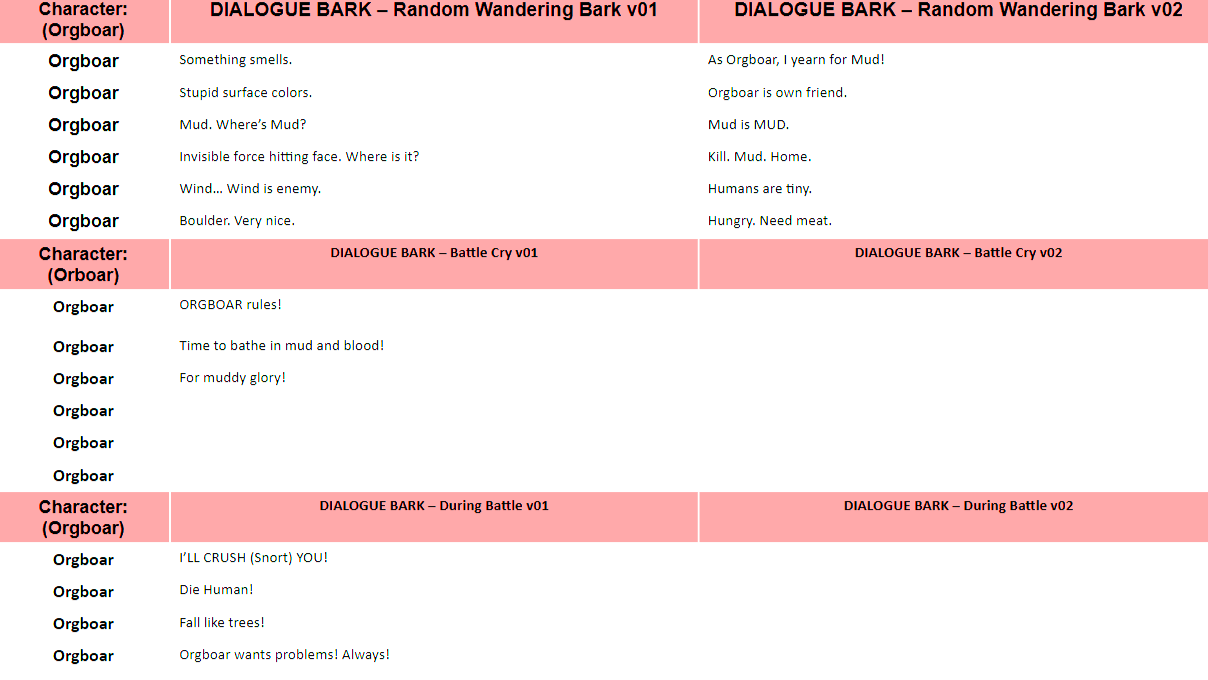
Striking a sense of fear and dread with a follow of laughter, is my exact intent in designing Orgboar as an enemy NPC
With its unique and grotesque design of a humanoid pig, players will always be engaged with a sense of dread when in combat
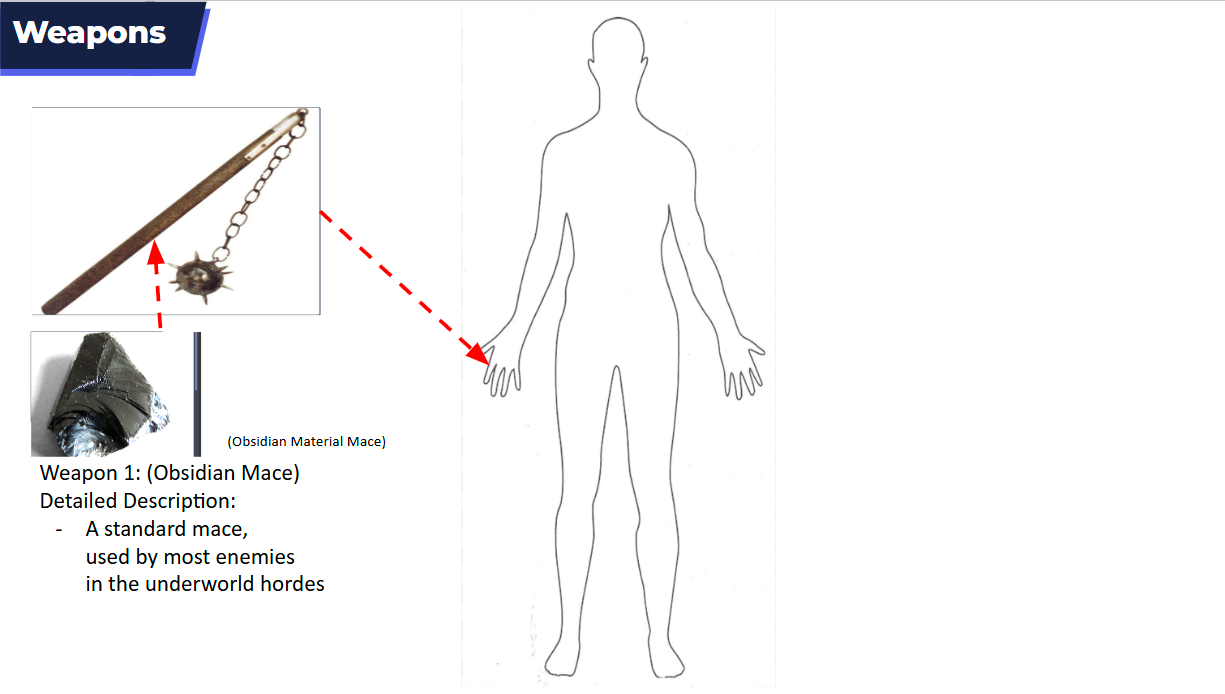
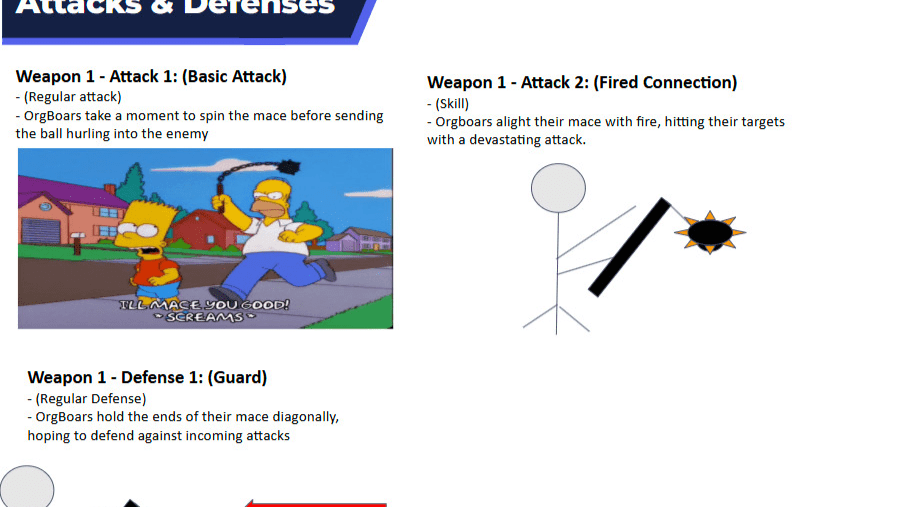
- The weapon and attack design strengthen the characteristics of being frightening to the player. The mace is a physical representation of the character, being something that is sharp and dangerous to others when flaying about.
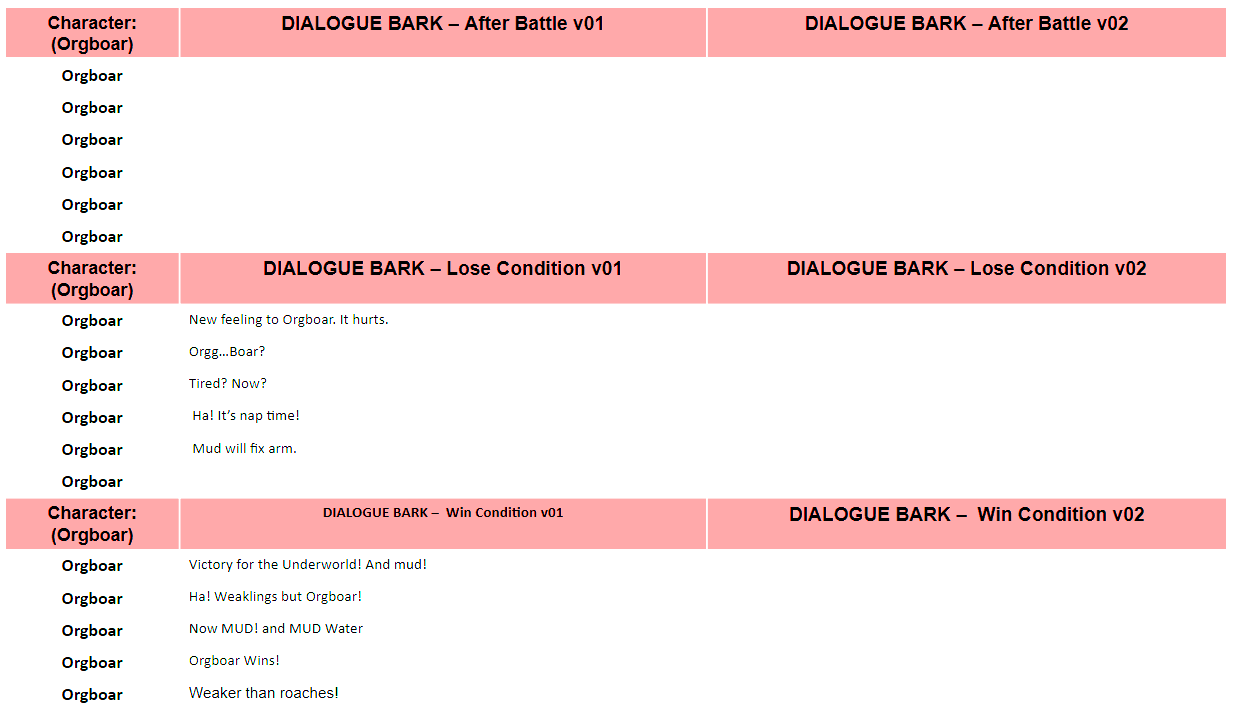
- Its comedic dialogue brings a unique twist to the character, adding layers to the one-dimensional design of being a fearful npc, showing the unfamiliarity that the character has with being from a different Biome
I designed this enemy NPC as a simple yet numerous grunt for players to interact with that shows all the appeal of the threat of the underworld in its terrifying design.
Storyboarding & Trailer Script Writing
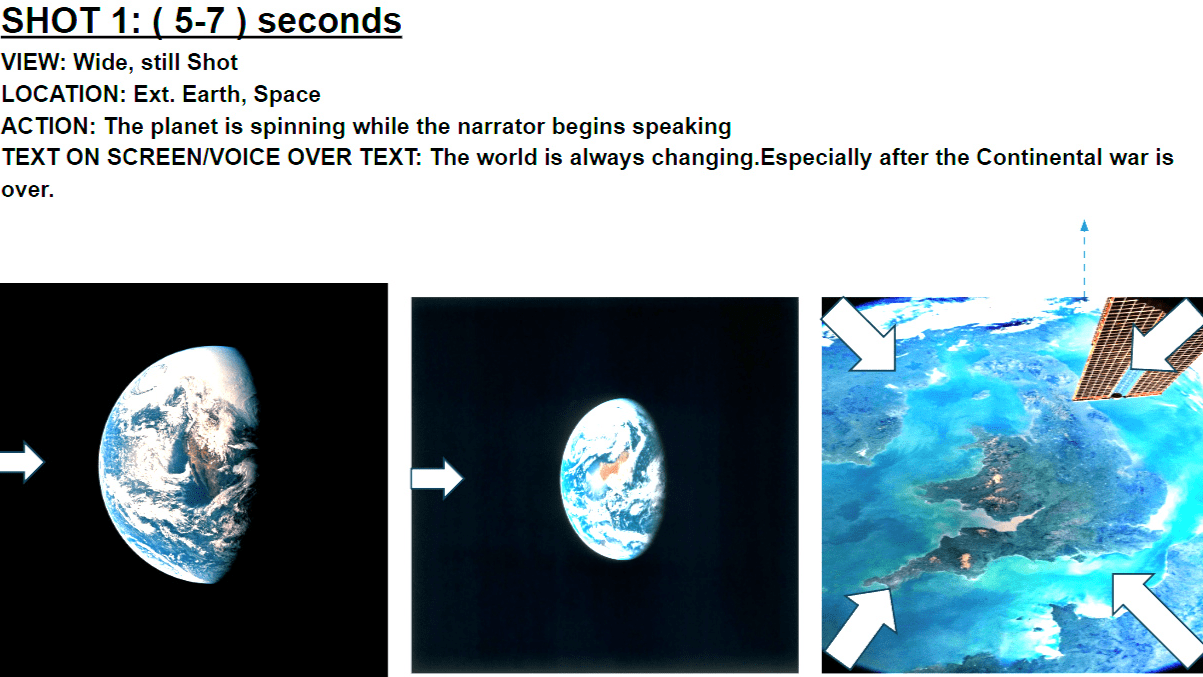
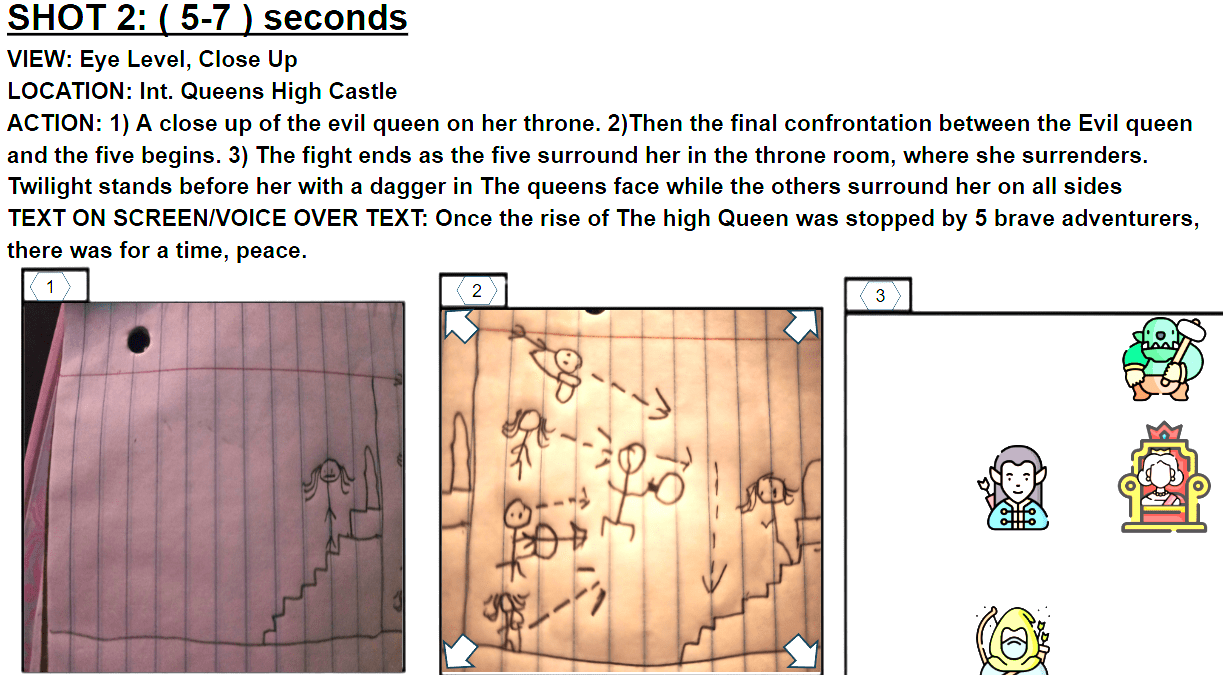
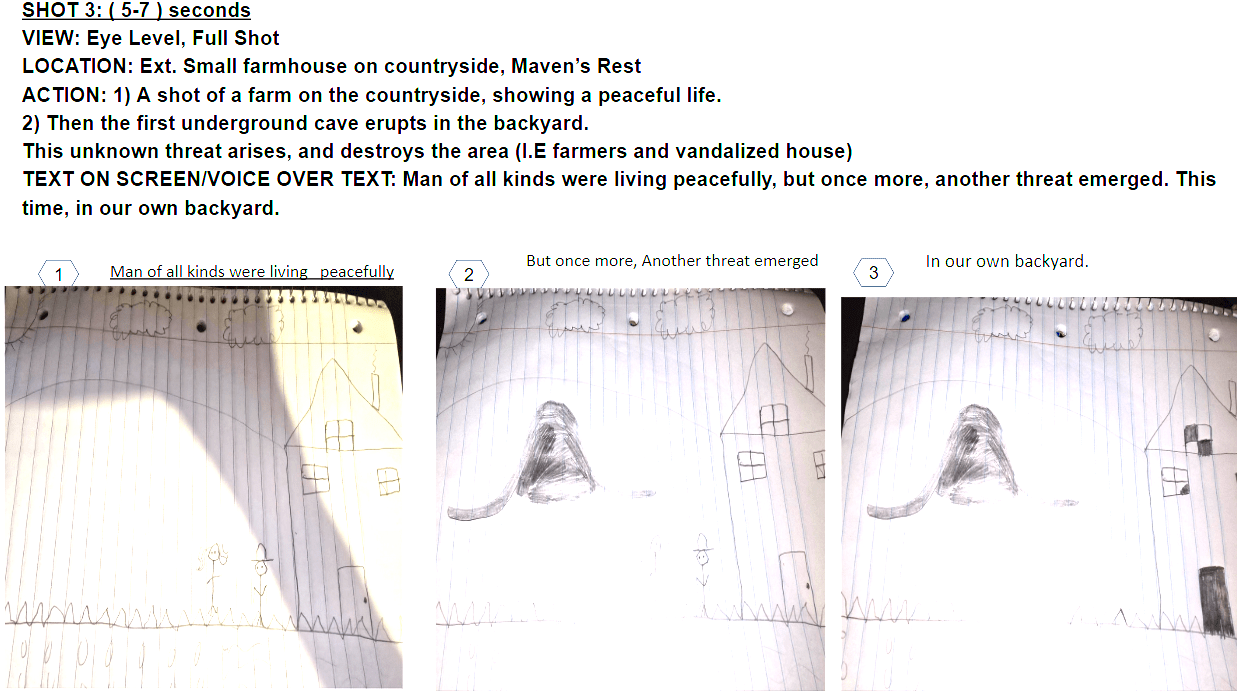
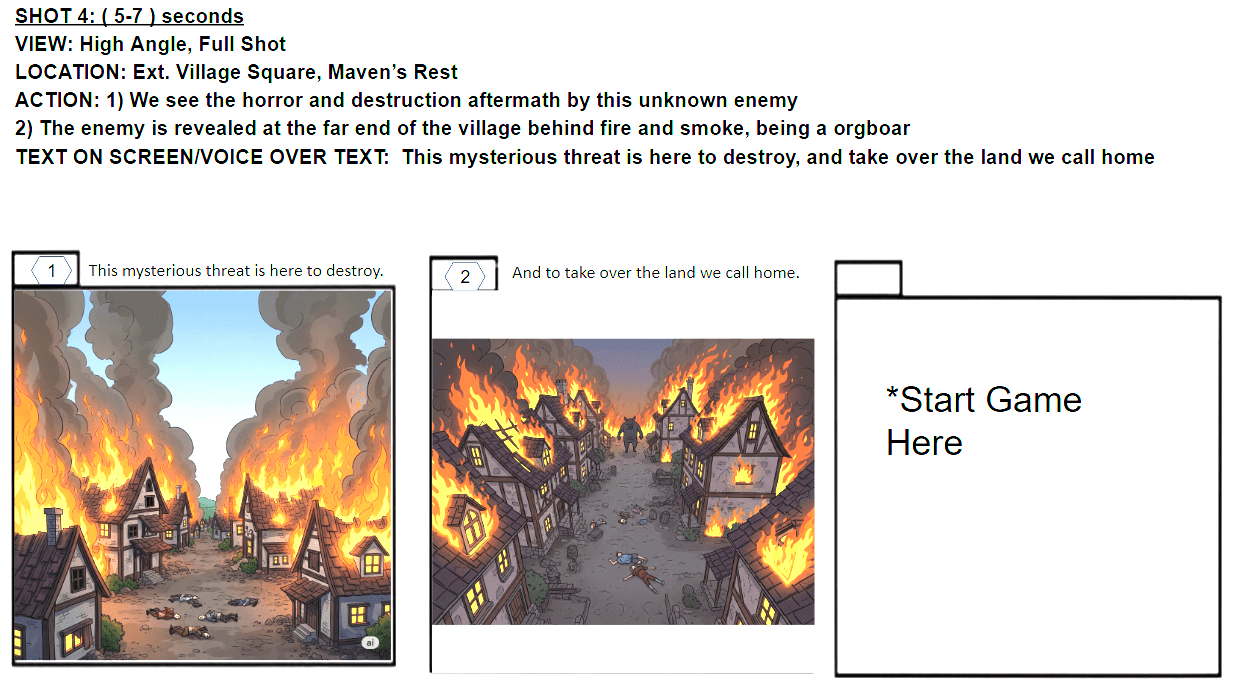
Developed a storyboard script for the opening act of the game, and created a storyboard to collaborate with the art and marketing team, and to get intern approvals. Used different methods, from hand drawing to sample images, to design each shot.
- Designed shots with worldbuilding in mind, creating an order that can be used as both a trailer and intro before the tutorial.
- Made sure to include clear camera locations, views, and actions for the art team.
- Developed text in the POV of a playable character to maintain the effort of a centric perspective of the game.
- designed text so that it can be open-ended, read by a narrator or by a playable character’s voice if chosen by the marketing team.
- Created a storyboard prototype with elementary assets for efficient and fast communication between different teams.
Voice Over Documentation
Created and configured a Voice-Over Script Document
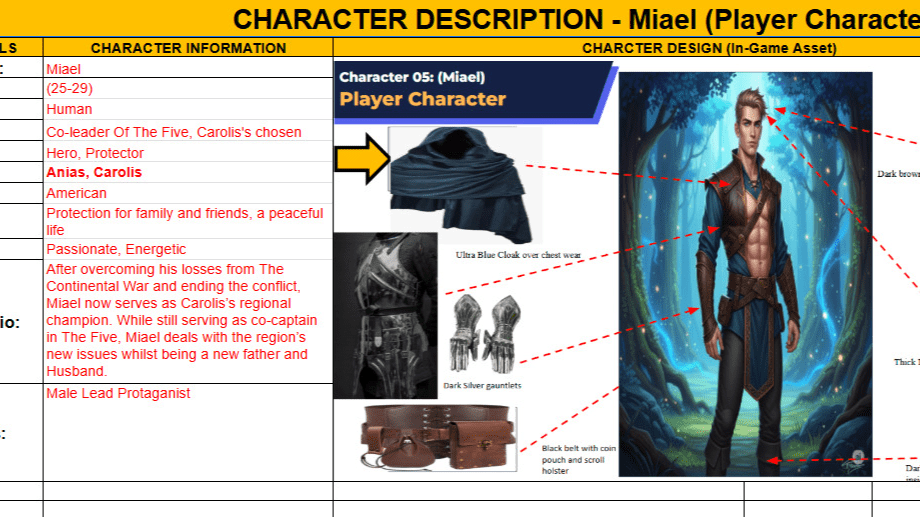
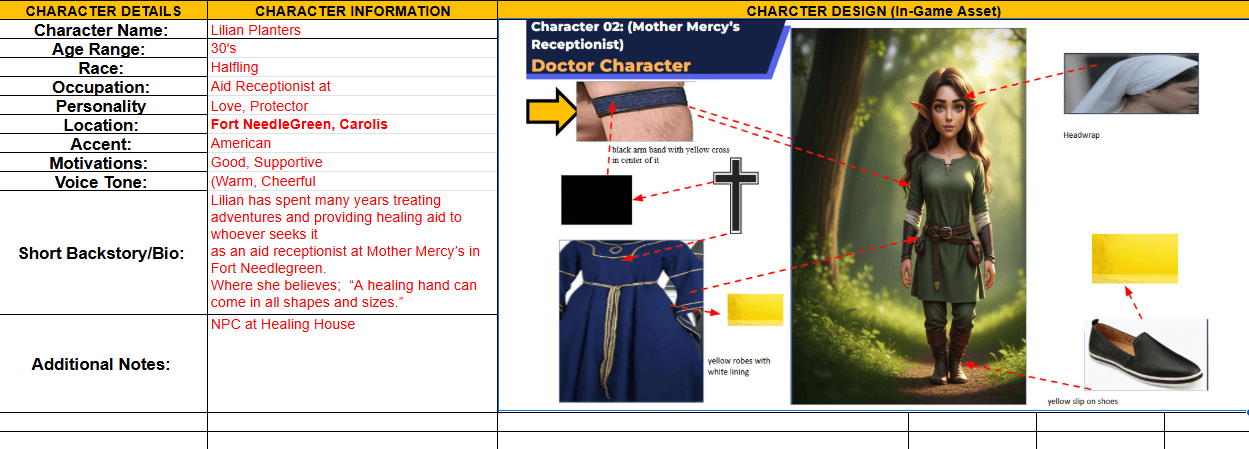
Created multiple voice-over documents for the playable characters, four NPC characters, and one enemy character that provided detailed information to assist the actor, which resulted in quicker and more efficient recording sessions.
Each document includes:
- character design images, character bios, Jungian personality archetypes, and vocal notes for each character
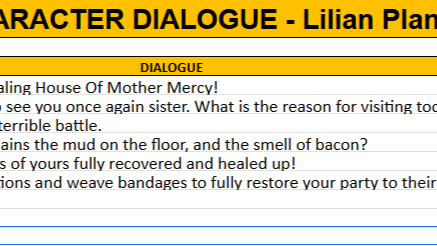
- All lines of dialogue pertaining to each character, along with scene details and quest summarizations, are provided to provide as much detail for the voice actor regarding mood and situational context.
Worldbuilding
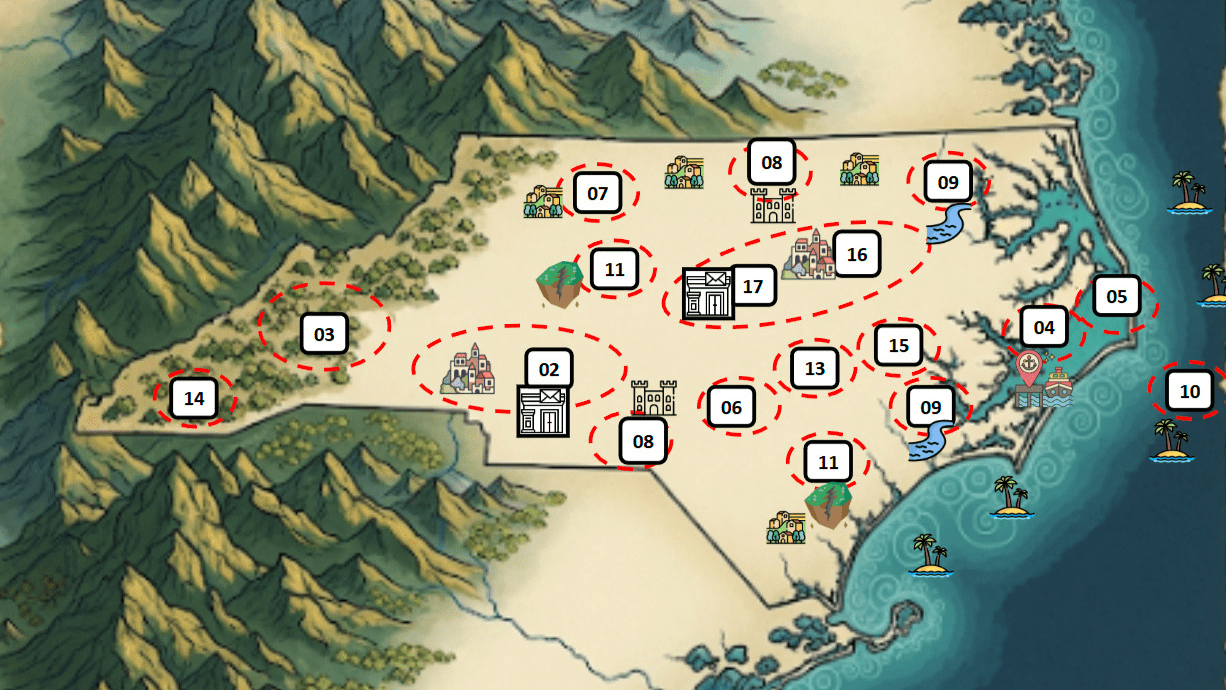
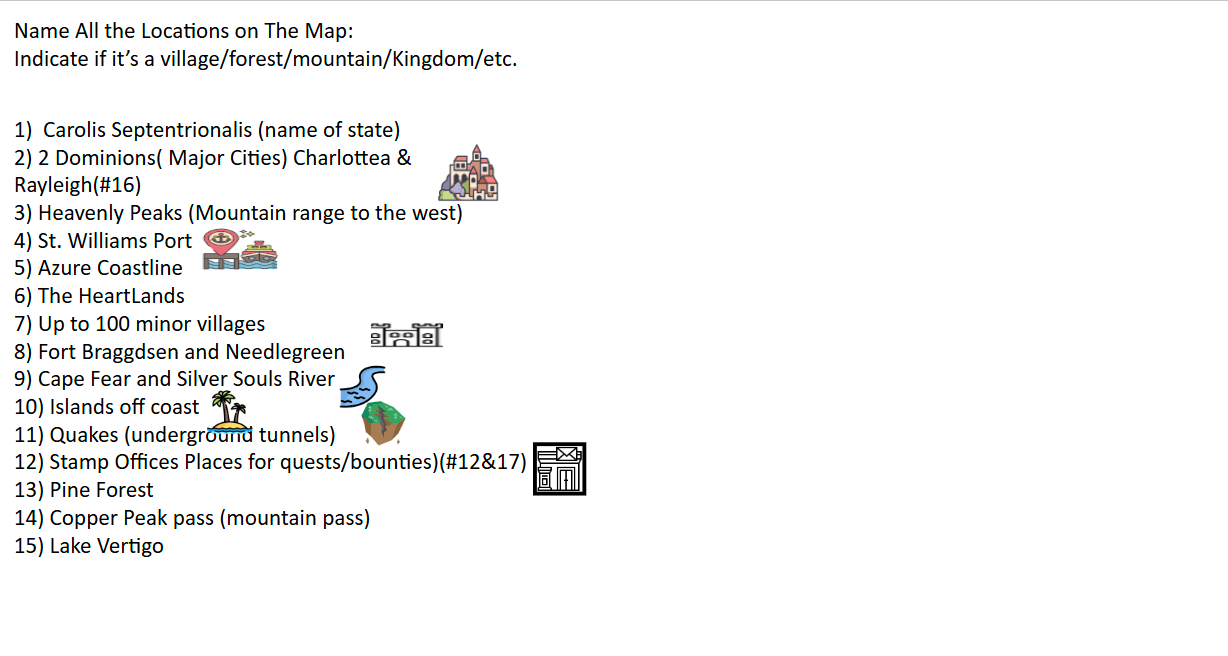
World Map Details And Highlighted Locations
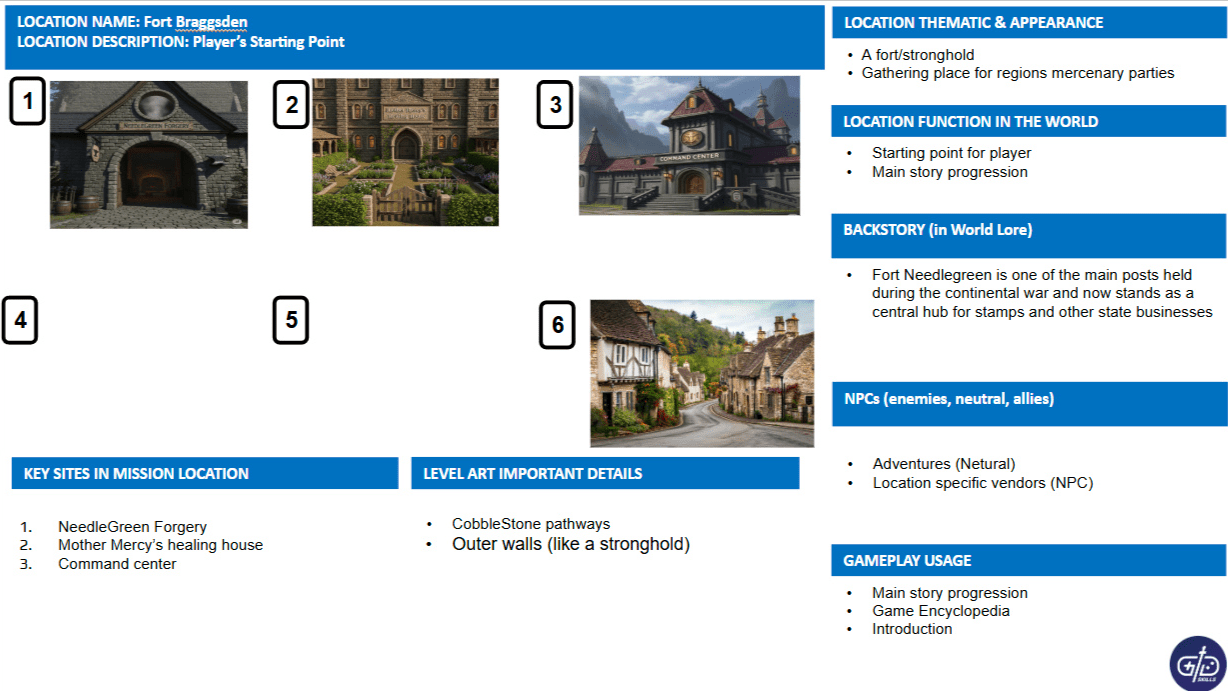
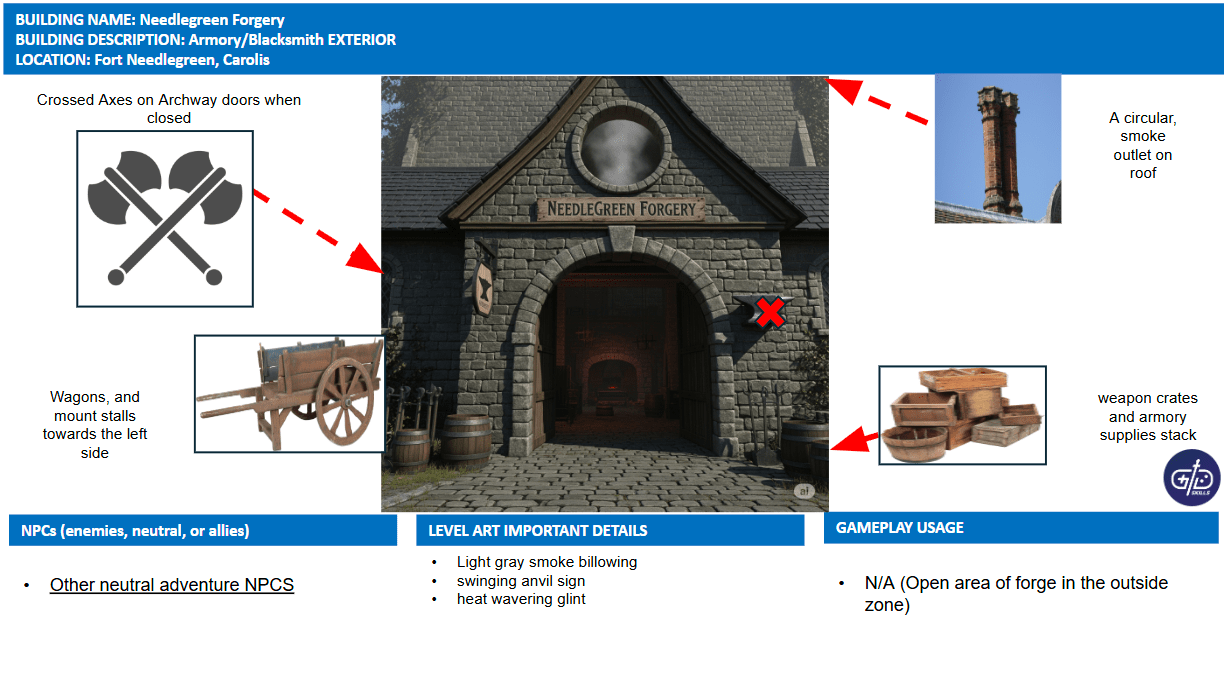
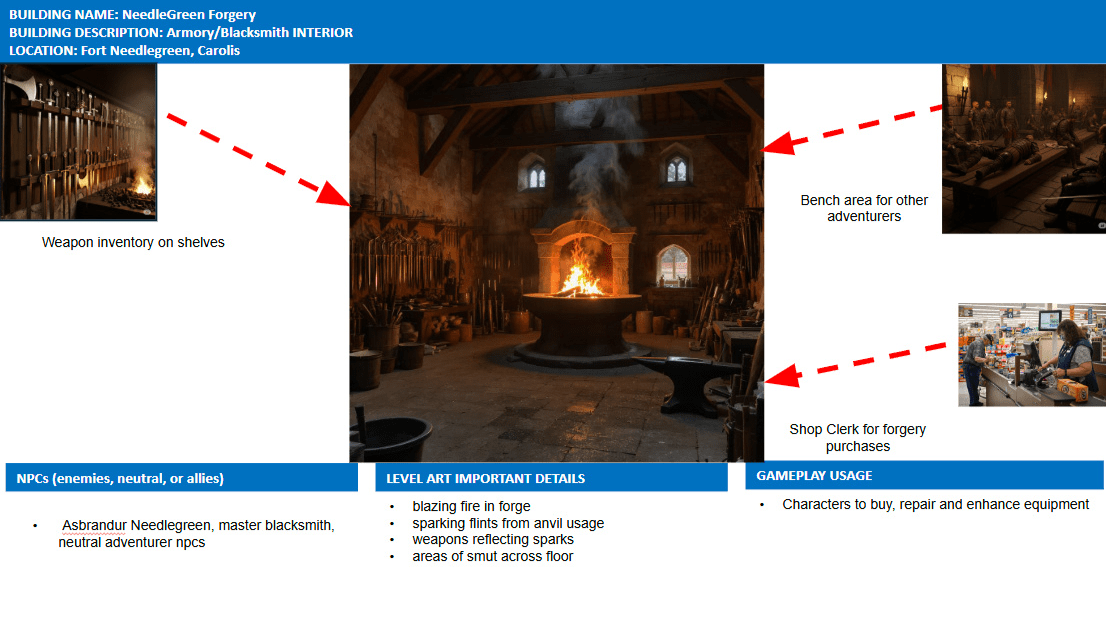
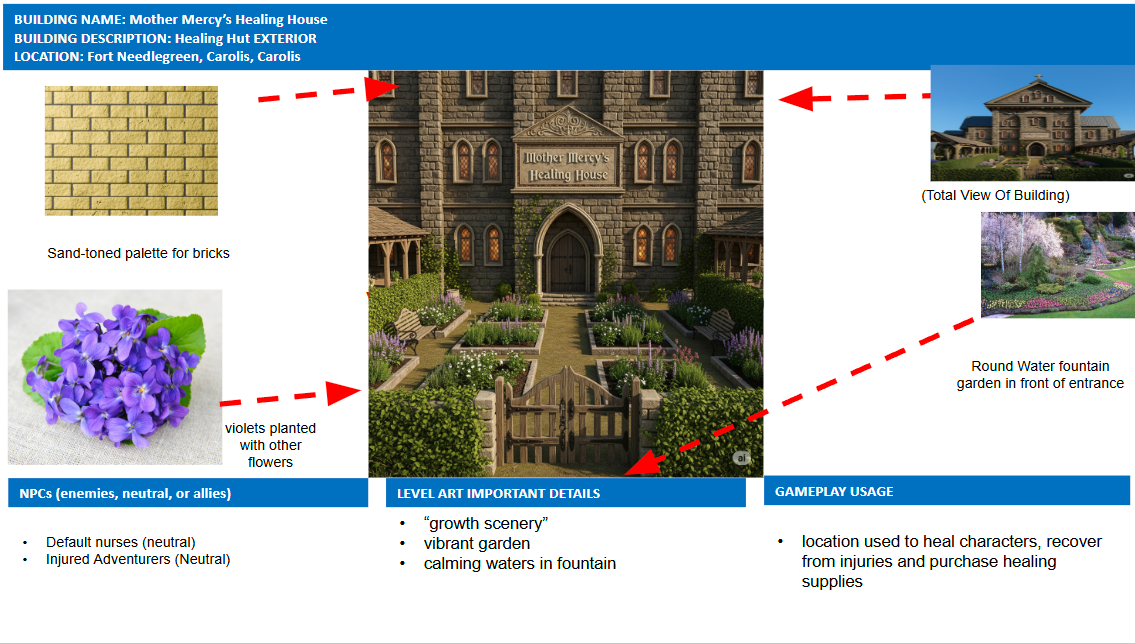
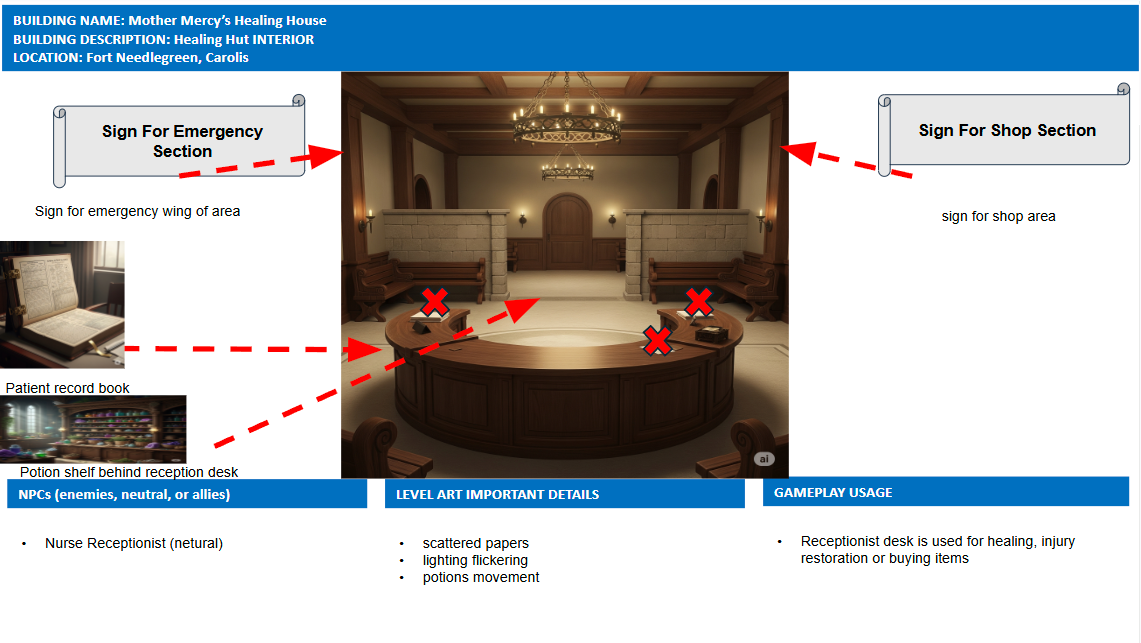
Fleshed Out Locations Designs
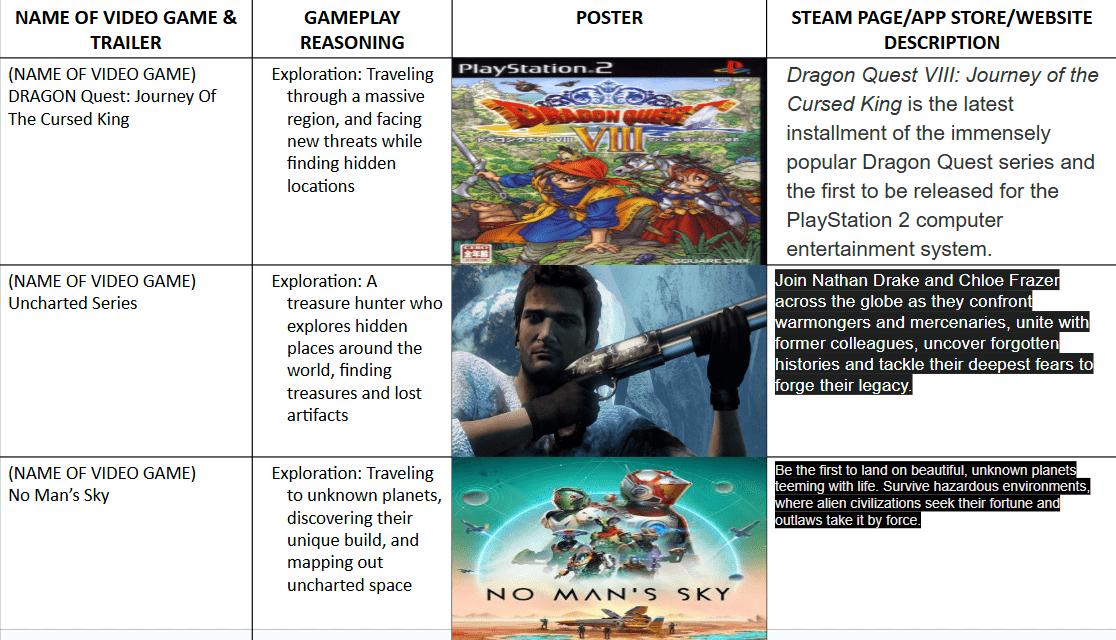
Genre and Content Research
Narrative Development Process
Audience Research
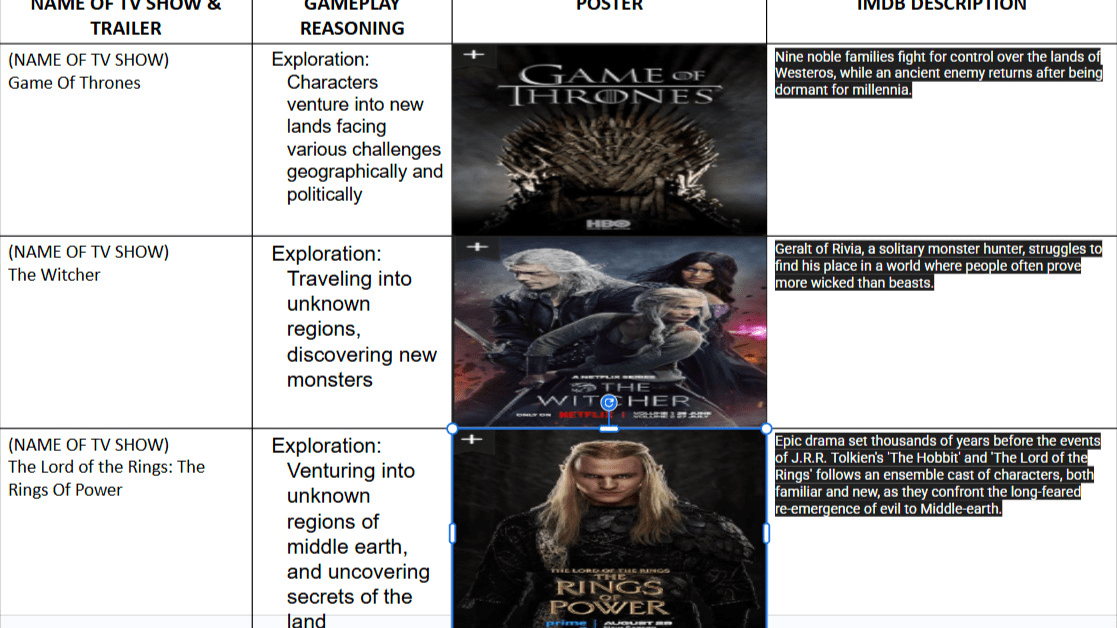
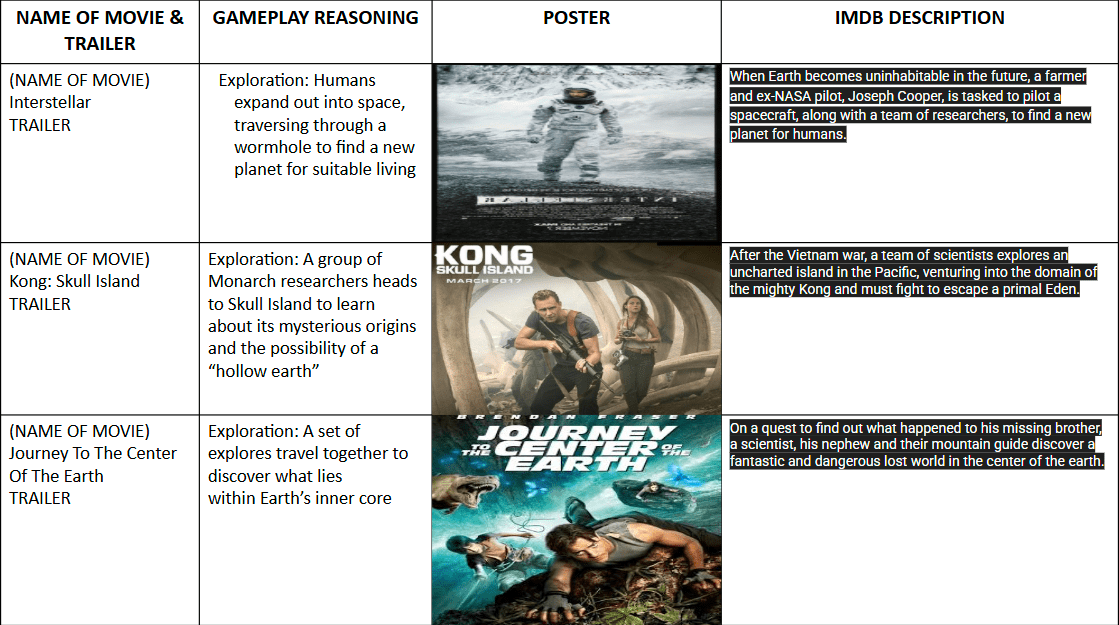
Analyzed games, movies, and shows with similar narrative themes.
Compiled a list of titles with synopses and trailer links.
Noted inspiration points to appeal to diverse audiences.
Lore Summaries
Crafted short summaries for box/store copy and in-game use.
Developed long summaries for website promotion.
Summaries aid design and narrative teams in identifying core themes.
Worldbuilding: In-Game Resources
Outlined zoology, magic, geography, species, social classes, resources, and technology.
Organized resource subsections to align with gameplay mechanics.
World History
Created a living document detailing prehistory, history, mythos, and current world state.
Included deep lore and biomes for late-game exploration, enhancing fantasy immersion.